

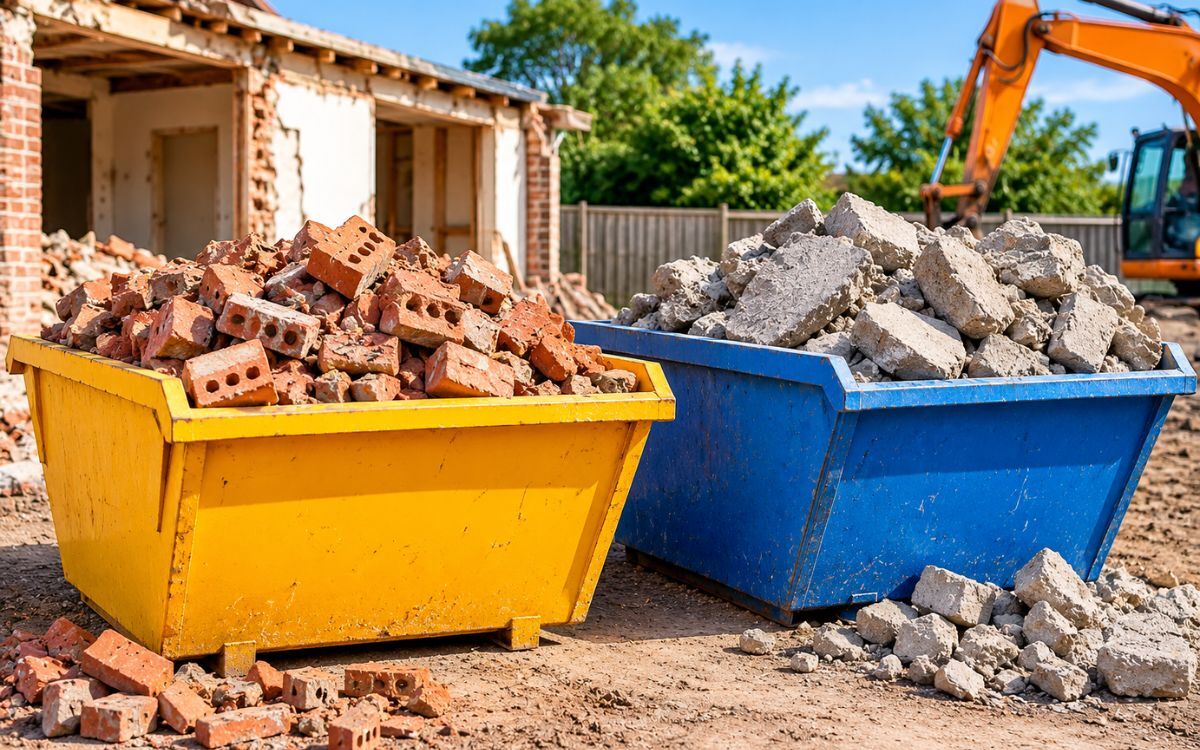
Why Brick and Concrete Need Their Own Skip Bins
If you’re knocking down a garden wall, pulling up an old driveway or tearing out a patio, you’ll quickly discover that bricks and concrete are a different kind of rubbish. They’re dense, they’re heavy, and they behave nothing like the offcuts and household clutter that fill a regular bin. That’s why reliable rubbish bin hire services offer dedicated bins for these materials, and why using the right one can save you money, time and a lot of hassle.
In this guide, we’ll explain what makes brick and concrete special, why they shouldn’t be mixed with general waste, and how to plan your demolition or renovation so the whole job runs smoothly.
What Makes Brick and Concrete Different?
Most household rubbish is light and bulky. Think cardboard, furniture, packaging and garden clippings. Bricks and concrete are the opposite: small in volume but very heavy. A bin that looks half empty can already be near its weight limit once it’s full of masonry.
They also have something else going for them. Clean brick and concrete are valuable materials. When they’re kept separate, they can often be crushed and recycled into products like road base and aggregate, which are used again on construction and civil projects. Mixed in with general rubbish, that opportunity is lost.
5 Reasons Brick and Concrete Need Their Own Bins
1. Weight and Safety
Heavy loads need to be handled carefully. A bin loaded with brick or concrete is much heavier than the same bin filled with general waste, and it needs to stay within safe limits for lifting and transport. Dedicated bins are designed with that in mind, which keeps drivers, vehicles and the public safe.
2. Recycling Potential
Clean, single-material loads are far easier to process. Bricks and concrete can be crushed and reused when they aren’t contaminated with timber, plastics, plasterboard or household rubbish. A dedicated bin helps keep that material out of landfill.
3. Lower Risk of Extra Charges
When the wrong materials end up in the wrong bin, the load may be reclassified at the processing facility, and that can mean higher disposal costs. Keeping brick and concrete in their own bins and using the correct bin for each helps you avoid unpleasant surprises.
4. Easier, Faster Processing
A pure load of concrete or brick can go straight to the right recycling stream. A mixed load has to be sorted first, which takes time and adds cost.
5. A Cleaner, Safer Site
When waste is separated at the source, your site stays tidier. Tradies know exactly where each material goes, there’s less double handling, and you reduce trip hazards from loose rubble.
Brick vs Concrete: Why Not Put Them Together?
It’s natural to assume that brick and concrete are close enough to share a bin. In practice, they’re often handled as separate streams, which is why we offer a dedicated bin for each:
- Brick bins are for bricks only.
- Concrete bins are for concrete only.
These are specialist bins, and they’re strictly single-material. That keeps your waste clean and gives it the best chance of being recycled. If your job produces both, the simplest approach is to separate them as you go, and book a bin for each.
What Counts as Brick and Concrete Waste?
Here are some common examples to help you plan:
Typically brick waste
- Old brick walls and garden edging
- Brick pavers
- Demolished brick outbuildings or planters
Typically concrete waste
- Old driveways, paths and slabs
- Broken footings and foundations
- Concrete steps and pads
If you’re unsure whether an item qualifies, such as reinforced concrete, tiles, mortar-heavy rubble or render, ask us before loading. Different materials may need different handling.
What Should Stay Out of a Brick or Concrete Bin?
Because these are single-material bins, it’s important to keep other waste out. Don’t add:
- Timber, plastics or packaging
- Plasterboard and insulation
- Soil, dirt or garden waste
- Household rubbish
- Hazardous materials such as chemicals, paint, gas bottles or batteries
- Asbestos or suspected asbestos
If you’re demolishing an older structure, be aware that some building materials from past decades may contain asbestos. If you suspect it, stop work and get advice from a licensed professional before disposing of anything.
How to Plan Your Brick or Concrete Removal
A little preparation makes a big difference.
1. Estimate the volume and weight. Measure the area you’re removing. Remember that concrete is extremely heavy, so a small volume can still weigh a lot. If you’re in doubt, plan for more than one bin or ask us to help you size it.
2. Separate as you demolish. Keep a brick pile and a concrete pile from the start. It’s much easier than sorting later.
3. Break it down safely. Large slabs may need to be broken into manageable pieces before they can go in the bin. Wear safety glasses, gloves, sturdy boots, and dust protection, and use the right tools.
4. Choose a good spot for the bin. Place it close to the work area on firm, level ground, because a loaded masonry bin is very heavy. Make sure the truck has clear access. If the bin needs to go on a public road or nature strip, check your local council’s permit rules first.
5. Don’t overfill. Keep material below the top edge of the bin so it can be safely collected.
6. Book early for bigger jobs. Demolition and excavation work often need bins on a tight schedule, so line up your bin before you start.
Combining Skip Bins With Bobcat or Excavator Hire
For larger demolition and site clearing jobs, hand-loading rubble isn’t always practical. J&J Skip Bins also offers Bobcat and excavator services with tipper support, which can make breaking up, moving and loading heavy material much faster. It’s a handy combination for driveways, slabs and bigger landscaping jobs.
Common Mistakes to Avoid
- Mixing brick, concrete and general rubbish in the same bin
- Choosing a bin that’s too large and then overloading it with dense material
- Letting soil or turf end up in a brick or concrete bin
- Forgetting to check for asbestos in older structures
- Blocking truck access with piles of rubble
A Quick Checklist Before You Book
- Identify what you’re removing: brick, concrete, or both
- Estimate the amount, and plan for the weight
- Sort materials as you demolish
- Choose the right bin type and size
- Decide where the bin will go, and check for permits if needed
- Keep contaminants out of the bin
Final Thoughts
Brick and concrete might look like just another pile of rubble, but handling them properly makes a real difference to your costs, your safety, and the environment. Using a dedicated bin keeps your waste clean, gives it a chance to be recycled and helps your project run on schedule.
J&J Skip Bins provides brick and concrete bins alongside general, green and soil waste options, so whatever your project involves, we’ve got a bin to suit. You can see the sizes available on our bins page, or call us on 0423 969 933 or 0415 555 734 to talk through your job. You can also visit our contact page to get a quote or book online.